M
E
D
P
R
O
J
E
C
T
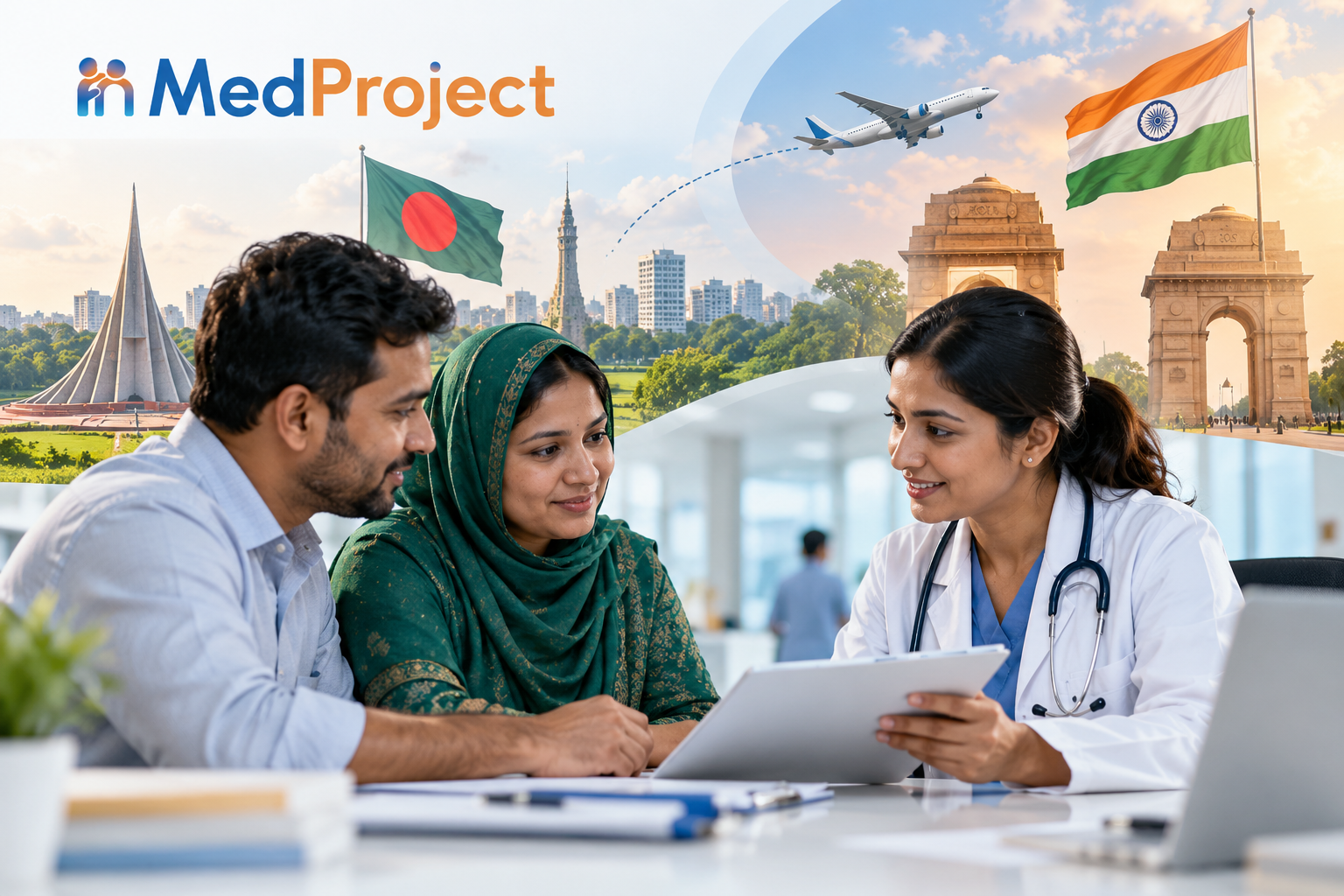
Medical treatment in India is an option many Bangladeshi patients consider when they need specialist care, a second medical opinion or treatment for a complex condition. With hospitals offering a wide range of specialties, patients can explore different treatment options without travelling as far as destinations in Europe or North America.
For patients travelling from Bangladesh, planning involves more than choosing a doctor. Hospital selection, treatment costs, medical visa requirements, accommodation and follow-up care all need consideration. MedProject Health helps international patients coordinate these steps so they can make informed decisions about their treatment journey.
Why Do Bangladeshi Patients Consider Medical Treatment in India?
India and Bangladesh share a border, making India a practical option for patients who want to travel with family members and remain relatively close to home. Depending on the destination, patients may travel by air or explore available land routes, subject to current border and travel requirements.
There are several other factors patients may consider when comparing healthcare options.
Access to specialist hospitals: Indian hospitals offer care across specialties such as cardiology, oncology, orthopaedics, neurology, fertility treatment and organ transplantation. The right hospital depends on the patient’s diagnosis and the facilities required.
Treatment choices: Patients may be able to consult specialists, seek a second opinion and compare proposed treatment plans before deciding where to receive care.
Treatment costs: The cost of medical treatment in India varies by hospital, doctor, procedure, room category and length of stay. Some treatments may be less expensive than comparable private care in other countries, but costs should be compared using individual estimates rather than general percentage claims.
Travel and family support: Being relatively close to Bangladesh can make it easier for some patients to plan travel with a companion or return for follow-up appointments. The most suitable destination will depend on the patient’s condition, hospital choice and travel needs.
Which Treatments Do Bangladeshi Patients Seek in India?
Patients travel to India for a range of medical specialties. The appropriate treatment and hospital depend on the diagnosis, medical history and recommendations of qualified doctors.
Cardiology and Cardiac Surgery
Patients may seek evaluation for coronary artery disease, heart valve problems and other cardiovascular conditions. Depending on the diagnosis, treatment options may include medication, angioplasty, bypass surgery or valve procedures.
The treating cardiologist should explain the available options, expected benefits, risks and recovery requirements before a decision is made.
Cancer Treatment
Cancer care may involve surgery, chemotherapy, radiation therapy, immunotherapy or a combination of treatments. Patients considering treatment in India should share pathology reports, biopsy results, imaging and previous treatment records so that the relevant oncology team can review the case.
The recommended approach depends on the cancer type, stage and individual circumstances.
Kidney Treatment and Transplant
Patients with complex kidney conditions may seek specialist nephrology care, dialysis planning or an assessment for kidney transplantation. Transplantation involves additional medical and legal requirements, including donor evaluation and the necessary approvals.
Patients should confirm eligibility and documentation requirements with the treating hospital and the relevant authorities before making travel plans.
Orthopaedics and Spine Surgery
Indian hospitals provide consultations for joint replacement, spinal conditions, fractures and other musculoskeletal problems. Patients should ask about non-surgical alternatives, the expected hospital stay, rehabilitation needs and the likely recovery process.
IVF and Fertility Treatment
Patients may explore fertility consultations, IVF and other assisted reproductive treatments. Before selecting a clinic, ask about the proposed treatment plan, what the estimate includes, relevant eligibility requirements and the clinic’s approach to explaining treatment outcomes.
Neurology and Neurosurgery
Patients may seek specialist opinions for brain and spinal conditions, epilepsy, movement disorders and other neurological problems. The choice of hospital depends on the condition and whether medical management, further investigation or surgery is being considered.
Explore our medical treatments in India to learn more about the specialties we support.
How Much Does Medical Treatment in India Cost?
Treatment cost in India is one of the important factors patients consider when comparing hospitals. However, there is no single price for a procedure because costs depend on the patient’s condition and the treatment recommended.
For example, a hospital estimate may include the surgeon’s fees, hospital room, investigations and procedure charges, while medicines, additional tests, intensive care, rehabilitation or an extended stay may be billed separately.
Before making a decision, ask the hospital for a written estimate and clarify:
- The proposed treatment or procedure and its expected scope.
- Doctor’s fees, hospital charges and room category.
- Whether investigations and medicines are included.
- The expected length of stay and any additional recovery period.
- Possible extra costs if the treatment plan changes.
- Follow-up appointments and any rehabilitation requirements.
Understanding Costs in Bangladeshi Taka
If you are planning treatment from Bangladesh, converting the estimate into Bangladeshi taka (BDT) can help you understand the approximate budget for your family.
Exchange rates and transfer charges can change, so check the current rate with your bank or authorised foreign-exchange provider. Also budget for flights or other transport, accommodation, meals, local transfers and the expenses of anyone accompanying the patient.
A lower initial estimate does not always mean a lower total cost. Compare what each hospital includes and ask for clarification before making financial commitments.
How to Choose a Hospital in India
When researching medical tourism hospitals in India, focus on whether the hospital and specialist are suitable for the specific condition rather than relying only on reputation or price.
Consider the following before deciding:
- Relevant expertise: Does the specialist regularly treat the condition in question?
- Hospital facilities: Are the required diagnostic, surgical and critical-care facilities available?
- Treatment plan: Has the medical team explained the proposed treatment and possible alternatives?
- Accreditation: Is the hospital accredited by a recognised body? Accreditation is one consideration, not a guarantee of an individual outcome.
- Written estimate: Are the expected charges and exclusions clearly explained?
- Follow-up care: What arrangements will be needed after discharge and after returning to Bangladesh?
You can learn more about hospital accreditation through the National Accreditation Board for Hospitals and Healthcare Providers (NABH).
Medical Visa for Bangladeshi Patients Travelling to India
Bangladeshi citizens travelling to India for medical care need to follow the applicable Indian visa process. The required documents and application arrangements can change, so always check the latest instructions before booking travel.
The general preparation process may involve:
- Gather medical records: Collect recent reports, prescriptions, diagnostic results and a referral or recommendation from your local doctor where available.
- Contact an Indian hospital: Request a medical review and, where appropriate, an appointment or treatment letter.
- Prepare visa documents: Check the official checklist for passport validity, photographs, medical documents, financial evidence and any other required paperwork.
- Apply through the official process: Follow the current instructions from the Indian mission and designated visa application centre in Bangladesh.
- Check attendant requirements: If a family member will accompany the patient, confirm the applicable medical attendant visa requirements and supporting documents.
For official information, visit the Indian Visa Application website for Bangladesh. You can also read our guide to medical visa assistance.
Visa issuance and appointment availability are determined by the relevant authorities. Applying for a visa does not guarantee approval, so check current requirements before finalising travel.
How MedProject Health Helps Bangladeshi Patients
Going to India for medical treatment can involve several arrangements, particularly when a patient is managing a serious condition. MedProject Health helps international patients coordinate the practical steps involved in exploring care in India.
Hospital and specialist selection: We help patients explore relevant hospitals and specialists based on the medical information provided and the treatment being considered.
Medical opinions and cost estimates: We can help coordinate the sharing of medical reports with relevant hospital teams and communicate the available opinions and estimates.
Medical visa assistance: We help patients understand documentation requirements and coordinate relevant hospital paperwork, where applicable. Visa decisions remain with the authorities.
Appointment and admission coordination: We can help coordinate consultation requests and communication with the hospital. Appointment and admission decisions remain subject to hospital confirmation and clinical assessment.
Travel and accommodation support: Depending on the arrangements agreed, we can help coordinate practical travel details, airport transfers and accommodation enquiries.
Medication and follow-up coordination: We can help direct medication-related questions to the relevant healthcare provider and coordinate follow-up communication where available. Prescribing and clinical care remain the responsibility of qualified professionals.
Learn more about our international patient support and the services available to patients travelling to India.
Frequently Asked Questions
Is India a good option for Bangladeshi patients seeking treatment?
India may be a suitable option for some patients because of its range of specialist hospitals and treatment options. The right choice depends on the diagnosis, the doctor’s recommendations, hospital facilities, costs and the patient’s individual needs.
Is medical treatment in India cheaper than private treatment in Bangladesh?
Costs vary depending on the condition, hospital and treatment plan. Some procedures may be more affordable in India, while others may have comparable costs. Compare written estimates and consider travel, accommodation and follow-up expenses before deciding.
Can I get a treatment cost estimate before travelling?
You can request an estimate by sharing your available medical reports with the relevant hospital team. The estimate may change if additional investigations or a different treatment plan are required. Ask what is included and excluded before booking travel.
Can a family member accompany me?
Patients may be able to apply for the appropriate medical attendant visa for an eligible companion. Check the current official requirements, including the number of attendants permitted and the documents needed for each applicant.
How long will I need to stay in India?
The duration depends on the treatment, the patient’s recovery and the treating team’s advice. A consultation may require a shorter visit than major surgery or a treatment plan involving several sessions. Ask the hospital for an estimated timeline before arranging transport and accommodation.
How do I start planning treatment in India?
Gather your latest medical reports, prescriptions and investigation results. You can then contact MedProject Health to discuss your medical enquiry and understand the coordination options that may be available.
Start Planning Your Medical Treatment in India
If you or a family member in Bangladesh is considering treatment in India, start by gathering the relevant medical records and understanding the options recommended by qualified doctors.
MedProject Health can help coordinate enquiries with relevant hospitals and guide you through practical steps such as appointments, cost estimates, visa documentation and travel planning, depending on your requirements and the services agreed.
Contact MedProject Health to discuss your medical enquiry and learn about the next steps.